









Muslim and Islam are frequently used interchangeably, despite having different definitions. Islam originated in the Arabian Peninsula in the seventh century, making it nearly 1,400 years old. The term Islam signifies “submitting to God’s will “, in Arabic. It is a religion that adheres to the guidance of Prophet Muhammad (Peace Be Upon Him) regarded as the last messenger in a series of divine messengers. On the other hand, Muslims are adherents of Islam, submitting to the faith and abiding by its principles.
The birth of Islam
Islam first started around 610 CE when Prophet Muhammad (PBUH) got the first message straight from God, delivered by the Angel Gabriel. This signified the start of the Quran, Islam’s holy book, which Muslims see as God’s own words. Throughout the following 23 years, these insights persisted, molding the beliefs, traditions, and societal regulations of Islam. In its beginnings, Islam encountered obstacles such as resistance from the Quraysh clan in Makkah, its birthplace. So, back in 622 CE, the prophet Muhammad and his followers moved to Madinah, that’s what we call hijra. From there, it was all about good vibes and progress for the Muslim squad, which set the stage for Islam to spread all over the Arabian Peninsula.
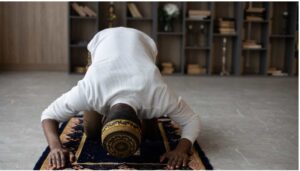
Spread of Islam and formation of Muslim societies
After Prophet Muhammad (peace be upon him) passed away at 63 years old in 632 CE, his companions and followers took charge of the community. This event signaled the emergence of the caliphates playing a role, in spreading Islam beyond the Arabian Peninsula to territories, across Africa, Asia and Europe through commerce, diplomatic efforts and military conquests. As Islam expanded, it assimilated different cultural customs and languages, resulting in a range of Muslim communities while upholding fundamental beliefs.
Golden age of islam
The inception of the Abbasid Caliphate in 750 CE heralded a notable era of cultural, scientific, and intellectual advancement recognized as the islamic Golden age. During this time, there were developments in various fields such as science, mathematics, medicine, philosophy, and art, with Baghdad serving as a center for knowledge where scholars translated and safeguarded works from different cultures like Greek, Persian, and Indian. Prominent individuals such as Al-Khwarizmi in mathematics and Ibn Sina in medicine had a significant impact on worldwide understanding through their contributions.
From empires to modern states
The Ottoman, Safavid, and Mughal empires were among the great empires that were largely influenced by Islam. These empires not just supported Islamic teachings but also established unique Muslim cultures. Nevertheless, the colonial period during the 19th and early 20th centuries resulted in notable transformations. Colonial rule affected the political, social, and economic systems of numerous regions with Muslim majority populations. As these areas achieved independence in the 20th century, they established contemporary states, frequently encountering the dilemma of harmonizing Islamic principles with modern governance.
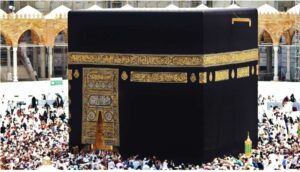
Islam in the modern world
Currently, Islam has become the second most widely practiced religion worldwide, counting over 1.9 billion followers from various ethnic, linguistic, and cultural heritages.
Due to the significant role of the Muslim habitat in global matters, the Western world is increasingly focused on investigating Islam and its connection to the Muslim way of life. It is accurate to suggest that Muslims are also demonstrating a comparable curiosity in exploring the truth of Islam, to understand how they can embrace modern approaches without compromising their faith. Lately, there are two groups among Muslims: One advocating for a more modern approach to religion even if it means compromising traditional beliefs and practices, while the other group believes modernization should be compromised for religion. The third group is gaining momentum with a belief in finding a balance between contemporary society and traditional faith, bridging the gap between the two existing groups.
Muslims are predominant in certain countries and form minorities in others, including the United States, Europe, and India. This has resulted in a diverse range of understanding and customs, as Muslims adapt to their beliefs within the framework of globalization, technology progress, and modern challenges. Islamophobia, tensions in certain regions with a Muslim majority, and the influence of religion on governance remain important issues in modern Muslim communities.
The unity and diversity of Muslim identity
The present day Muslim identity shows uniformity in beliefs yet variability in practices. The core practices that Unite Muslims worldwide are the 5 pillars of Islam: Shahada (faith), Salah (prayer), zakat (charity), Sawm (fasting) and Hajj (pilgrimage to Makkah). However, there is variation in the interpretation and observance of Islam among different cultures. Muslims in Indonesia, the biggest Muslim majority Nation globally, incorporate practices from native cultures, while Muslims in the Middle East and South Asia have unique cultural traditions that impact their religious practices.
In summary, although Islam as a belief stays the same, Muslims as people and groups have adjusted and changed along with the course of history. The words Muslim and Islam carry a profound history, from the Prophet Muhammad’s teachings to the modern experiences of Muslims around the globe. Comprehending these terms is important for recognizing the complex connection between a timeless faith and its practitioners, each adding their own unique elements to its ongoing development.
About Author
Haleema Limited author is writing articles for the basic knowledge of Islam for the acknowledgement. The travel agency Luton is offering Hajj packages 2025 from UK, also announced monthly Umrah packages 2025 for LutonU and UK residents.


